My Anxiety
Anxiety presents differently in each person because every individual has a unique history, temperament, and internal response system. What activates discomfort or distress in one person may not affect another in the same way. This page is designed to help you begin identifying your own patterns, sensations, and emotional responses. By understanding what impacts you personally, it becomes easier to recognize early signs and respond in ways that support your well-being.
ANXIETY SCALE
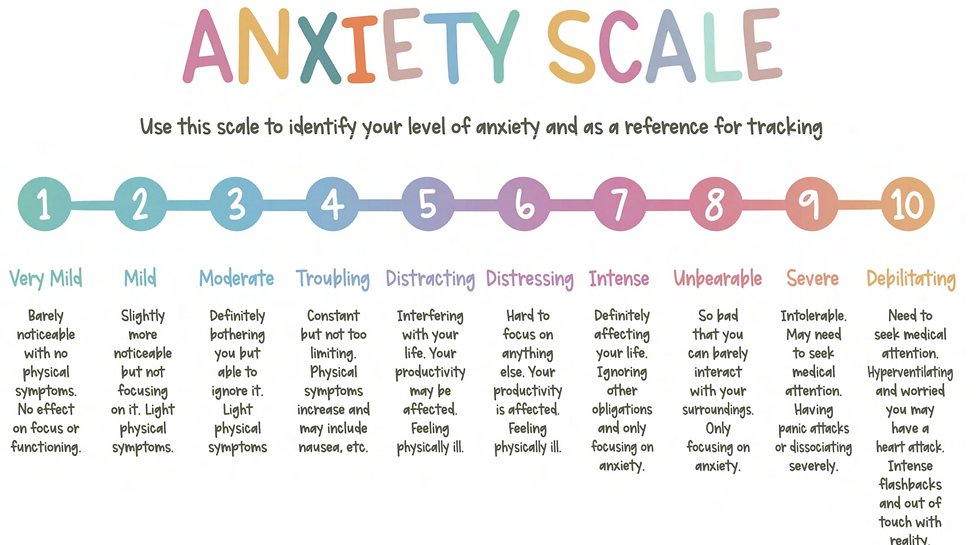
We’re going to use a version of the SUDS (Subjective Units of Distress Scale) a simple 1 to 10 rating to check in on how anxious or distressed you’re feeling at times. I want you to start using it whenever we’re talking about your anxiety. Think of it like your anxiety thermometer.
Why is this helpful? Because anxiety can feel really big and overwhelming, but when we give it a number, it becomes something we can observe, track, and work with. It also helps us notice patterns like what makes it spike, what helps bring it down, and how it changes over time. Even if the number doesn’t drop right away, just noticing it and naming it gives you more awareness and control.
The things that shake us that we can't shake off
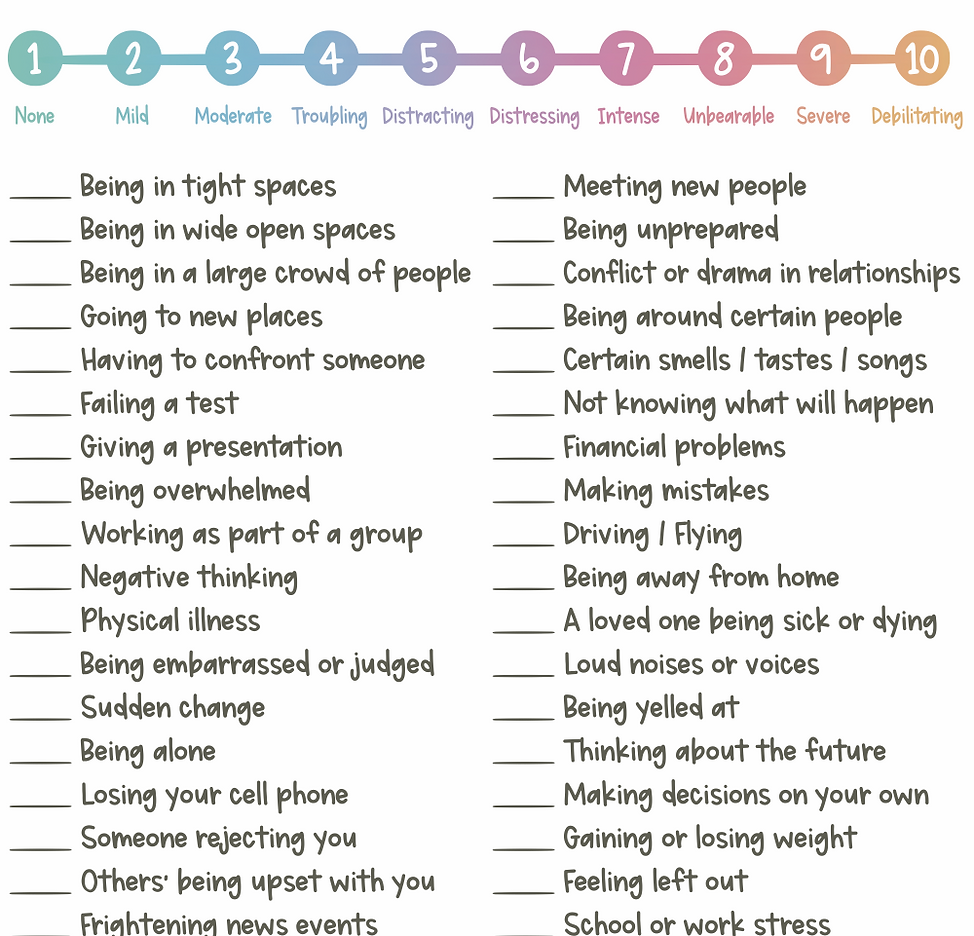
A trigger is anything that tends to set off that anxious response in you. Sometimes we go through life feeling anxious but don’t slow down to really ask, what’s setting this off? So our goal right now is to name your triggers clearly and honestly. We want is to be mindful of them, learn not to avoid them, and get familiar with what and how your system reacts. Some triggers might be mild, and others might hit harder. Knowing the difference helps us figure out where to start and what to focus on first. We’re working toward a life where you can face these situations, knowing that you can handle them better than your anxiety tells you (hint: it's LYING TO YOU).
Most people don’t like the things that trigger stress or anxiety like arguments, or the idea of losing someone. They’re uncomfortable for anyone. The difference is, stress usually has a clear cause and goes away once it’s handled. But anxiety sticks around — even when nothing’s wrong anymore. You feel it in your body, like something’s off, like you have to fix it right now. It can feel unbearable, like you can’t relax no matter what you do. For the worksheet below, really take your time thinking about what makes you feel activated in your body.
Common & Uncommon Anxiety Triggers
1. Intrusive Thoughts:
-
Sudden, unwanted thoughts about harm, morality, contamination, or loss of control.
-
Fear of acting on thoughts even without intent.
-
Persistent “what if” scenarios that are hard to dismiss.
2. Substances:
-
Caffeine (e.g., coffee, energy drinks).
-
Alcohol, especially during hangovers or withdrawal.
-
Cannabis or other recreational drugs.
-
Certain medications or supplements.
3. Sleep Deprivation:
-
Insufficient or poor-quality sleep.
-
Jet lag or disrupted sleep schedules.
-
Staying up late due to stress or screen time.
4. Specific Phobias:
-
Fear of flying, heights, spiders, or public speaking.
-
Medical-related fears like needles or blood.
-
Weather-related fears such as storms or earthquakes.
5. Sensory Triggers:
-
Loud or repetitive sounds (e.g., alarms, chewing).
-
Bright or flickering lights.
-
Uncomfortable clothing textures.
-
Certain smells or crowded spaces.
Triggers can be obvious but they can also be really specific or unexpected. Here are some less common clinical examples I’ve seen:
-
Persistent Nail Polish: A small piece of nail polish that won’t come off can create a feeling of something being “wrong” or unfinished, leading to anxiety.
-
Memory Lapses: Forgetting a word or name and being unable to recall it can cause anxiety over the fear of never remembering it..
-
Sunset Anxiety: An increase in anxiety symptoms as the sun sets, possibly due to the transition from day to night or associated routines.
Worksheet